Bleeding Tooth Fungus - What You Need To Know About Hydnellum Peckii
The world of wild mushrooms is full of wonders. Some are innocent-looking but actually poisonous if you eat them. Others expect very sinister, although they're perfectly harmless. And then there'due south the Hydnellum peckii, or, as is known locally, the bleeding tooth fungus.
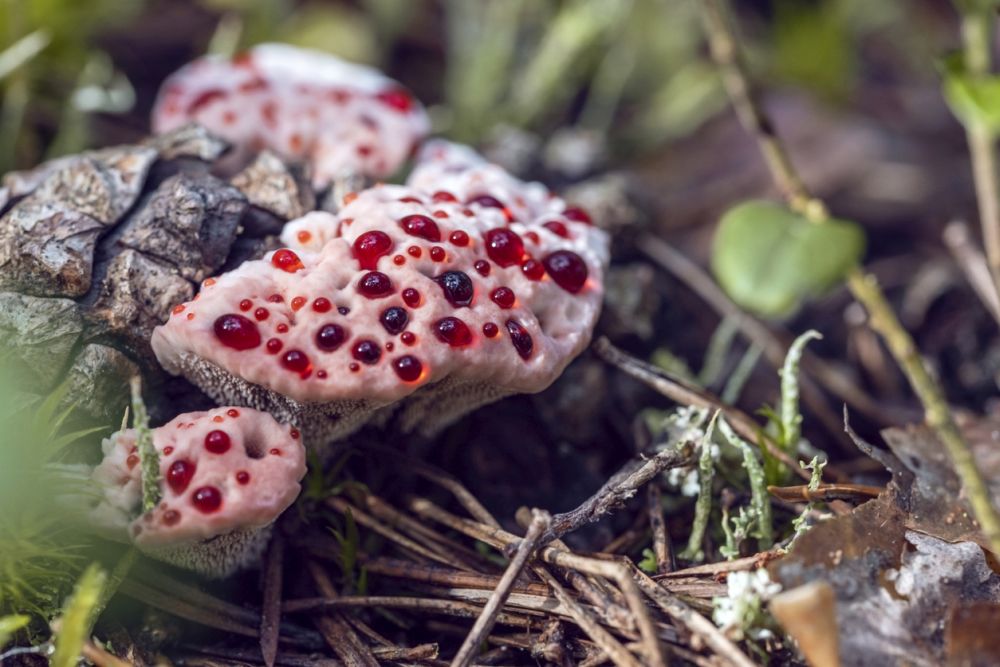
It'due south not the only proper noun for this bizarre fungus. Some phone call information technology the "devil'southward toot,h" while others know it under the benign name of "strawberries-and-cream". We prefer this last proper noun since it aptly describes this unusual mucus without all the melodramatic effects of the outlandish names. Then what is the bleeding tooth fungus? What do you lot need to know about it? And how should yous deal with it if you come up across it in the forest?
The Truth about Bleeding Tooth Mucus
The bleeding tooth fungus belongs to a family of fungi that are as various as one can imagine. However, the one common thing that binds this family together is that all the species have teeth. The teeth are non bodily teeth. They're office of the mucus and are used to produce spores rather than attack.
Information technology's easy to run across why people might misfile the bleeding tooth fungus with a critter from sci-fi movies. It has all the appearances of an brute like a wild predator with all those long teeth and red goo oozing out of it and bubbling under its skin. Merely since fungi grow the parts above the ground only to make spores and multiply, information technology'due south easy to encounter why people error the spore-producing teeth of the haemorrhage tooth fungus with a sinister being from horror stories.
And then while the part you see on the surface with which resemble bloodied teeth is actually quite harmless, the story under the surface is totally unlike. Underground, the roots of the fungus spread far and broad in search of nutrients. Most of these nutrients they get from the roots of other plants that happen to be in their vicinity.
That doesn't mean that the bleeding tooth fungus sucks the nutrients off other plants, far from information technology. Both plants be in a symbiotic 'ectomycorrhizal' relationship equally the fungus gets the nutrients it needs while at the same time breaking the organic thing in the soil for the tree to absorb easily. Then as you can see, there'due south nada sinister at all about our fungus.
Characteristics and Habitat
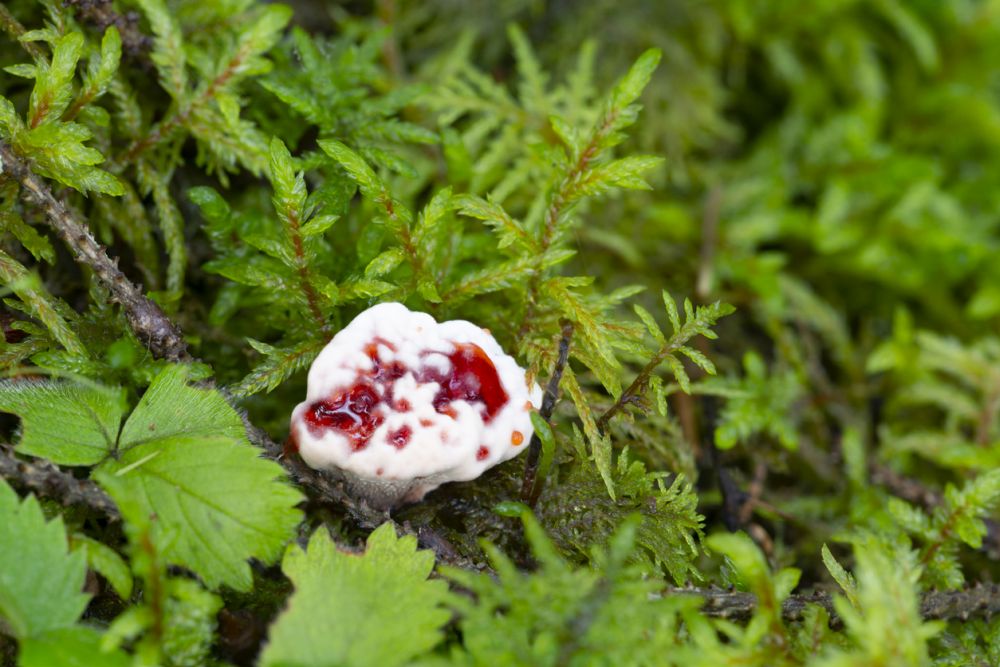
One of the well-nigh distinguishing features of the bleeding molar fungus, which lent its name to it, is the fact that information technology has teeth-like protrusions. Almost other fungus species have either gills or tubes that they utilise to develop and spread their spore. In this fungus, these tubes take the shape of teeth. They hang from the caps of the fungus which requite information technology all the appearances of a monster with teeth.
They mainly grow in woodland habitats. They develop a symbiotic relationship with other trees nearby, particularly oaks, pines, and birch copse. They produce fruits ordinarily between August and October every year. The fruit usually forms in the soil, not in dead woods,, every bit is the case with other mucus species.
The fungus prefers loose and sandy soil. So you'll often find them almost banks, in quarries, infringe pits, and on trackside. They don't grow well in an area covered by other vegetation. This is why they don't spread in big areas easily. Most often they keep growing in the same are. Their only method of spreading is past moving their roots from one tree to the next, which might accept years.
Haemorrhage tooth fungus also needs a special kind of soil. Information technology has to be well-drained soil, yet with higher than usual humidity levels. This is why they prefer to grow near bodies of water or where the tree branches create an enclosed habitat that prevents ventilation.
Some other abnormal characteristic of this mucus is that it doesn't demand nitrogen in the soil to abound and fruit. In fact, the absenteeism of nitrogen helps the fruits appear in abundance. Normally, it's the onetime growths of the fungus that bear fruits, although sometimes new fungus might produce small fruits.
The Ruby-red Goo
Finally, we need to address the elephant in the room. By that, we mean the cerise, blood-like goo. Information technology'southward eerie, to say the least, and if yous're seeing this fungus for the commencement time, you might be tempted to plow around and run in the opposite direction.
However, at that place'due south no cause for alarm here. Much like the fungus itself, this crimson goo is nothing more the sap of the plant. It's caused about frequently when the soil becomes soaked with water. The roots blot the excess water in what is known equally osmosis, even though the fungus has no need for that moisture.
The fungus is now distressed with so much pressure within information technology from the excess water. Ane style to handle the force per unit area is to force the water to the surface of the caps where information technology gets trapped within bubbles. Only why does it plough reddish in the process? Well, the respond lies in the abdomen of the fungus, so to speak.
The internal parts of the bleeding tooth mucus are usually red. The red paint is but a natural part of the found and doesn't betoken that the plant either feeds on blood or that it is poisonous. It'southward neither of those. Equally the water makes its mode from the roots to the surface of the fungus, it absorbs the crimson paint and turns into that red fluid.
It's not articulate whether this red sap is the reason the fungus often tastes bitter. One thing is clear, though. It's not toxic, and it'south condom to eat if you can handle its bitterness.
Tooth Fungus Varieties
The family of tooth fungus is large and widespread. Equally we mentioned all the species have teeth, but other than that they differ in their characteristics. Here are the nigh common species.
- Bankera Species: This species has large caps that are covered with debris which, along with the teeth requite an other-worldly appearance. The flesh of the caps is like shooting fish in a barrel to break, and the fruits are often white. When dried, it often gives off an odor similar to curry leaves or fenugreek.
- Hydnellum Species: This is the species that the bleeding tooth fungus belongs to. The flesh of the mucus is tough and not easy to break. It grows past merging with other vegetation and debris in its vicinity. The teeth are often chocolate-brown, and the spores are shades of chocolate-brown. When not covered with red sap, the cap is often pink, blue, or even brownish. The flesh is odorless when stale, although it's also biting to be used in food seasoning.
- Sarcodon Species: Unlike other species of the tooth fungus family, the caps of this species don't merge together. As such, they remain minor in size and don't accept debris or other vegetation blended in the flesh. The caps are brown, and the teeth usually gray. The fleshy cap is oft covered in scales. Since information technology doesn't incorporate debris and doesn't take a potent odor, it's frequently dried and used in cooking.
How to Deal with Haemorrhage Tooth Fungus
Many species of the tooth fungus are under conservation. That's due to the erosion of their habitat and the decline in their fruiting. Other invasive plants such as rhododendron and bracken take made it difficult for the bleeding tooth mucus to survive.
If y'all come up across the mucus, try non to disturb its habitat or move it around since that could be fatal for its survival. You should also protect the bleeding tooth fungus in your area. This includes abnegation from growing humus or other plants that would interlope on the fungus and forestall its growth and fruiting.
While some species of the tooth fungus family are used in cooking, the bleeding tooth fungus is mainly used commercially to make dye and in the pharmaceutical manufacture. While scientists haven't revealed the full truth behind the nature and beliefs of the strawberry cream fungus, 1 matter is for sure, it has anti-bacterial qualities that make it a good candidate in the medicinal world. Thanks to the prevalence of atromentin, a chemic chemical compound that has anti-coagulant capabilities, the bleeding tooth fungus has come a total circumvolve to actually have benefits to the blood apportionment in the human being body. Rather than suck your blood, it actually helps to prevent clots forming in the homo blood vessels.
More recent research has likewise constitute thelephoric acid in the flesh of the fungus. Information technology'south another chemic compound that might be used ane mean solar day to care for Alzheimer's.
bermudezodevidis1959.blogspot.com
Source: https://www.diys.com/bleeding-tooth-fungus/

Post a Comment for "Bleeding Tooth Fungus - What You Need To Know About Hydnellum Peckii"